World Footprints
World Footprints is an award-winning travel podcast exploring how travel can deepen cultural understanding, strengthen communities and create positive social impact. Through thoughtful conversations and destination stories, co-hosts Tonya and Ian Fitzpatrick introduce listeners to the people, histories and perspectives that shape places around the world.
As two lawyers who combined their passion for meaningful travel with a commitment to social justice, Tonya and Ian look beyond traditional tourism coverage. World Footprints examines destination stewardship, cultural heritage, responsible travel, community-led tourism and the ways travel can become a force for connection and change. Guests include local leaders, authors, travelers, tourism professionals, cultural advocates and changemakers whose voices are often missing from mainstream travel media.
The podcast is guided by Ubuntu, the Southern African philosophy often expressed as “I am because we are,” and by the Sanskrit principle Tat Tvam Asi, meaning “I see myself in others and others in myself.” Together, these ideas reflect the belief at the heart of World Footprints: travel is not only about where we go, but how we encounter people, respect cultures and understand our shared humanity.







Episodes

Sep 30, 2026
Sep 30, 2026
59 min
25 Years of The Amazing Race: Our Conversation With Phil Keoghan
Editor’s Note: The Amazing Race is celebrating 25 years on television, making this a fitting time to revisit our conversation with longtime host Phil Keoghan. In this World Footprints episode, Phil talks about travel, risk and the near-death experience that inspired his “No Opportunity Wasted” philosophy. The episode also features Raw Travel creator Robert Rose, a journey through Dominica and The Great Human Race co-host Cat Bigney.
For 25 years, The Amazing Race has sent travelers racing across borders, navigating unfamiliar cultures and testing what happens when carefully made plans collide with the unexpected.
As the groundbreaking CBS series celebrates its 25th anniversary, we're revisiting our conversation with longtime host Phil Keoghan about something that has always been at the heart of the show: the transformative power of travel.
Keoghan joined us to talk about how The Amazing Race reflects his own approach to life, his passion for exploring the world and the experience that inspired his philosophy of leaving “No Opportunity Wasted.”
But this episode travels well beyond The Amazing Race. We also talk with Raw Travel creator and host Robert Rose about socially conscious travel, visit the Caribbean island of Dominica and explore human migration and survival with The Great Human Race co-host Cat Bigney.
Phil Keoghan on The Amazing Race, Travel and Taking Chances
Phil Keoghan has become one of television's most recognizable travel hosts as the longtime host and executive producer of CBS's The Amazing Race.
Since the series premiered in 2001, competitors have raced around the world, confronting language barriers, unfamiliar transportation systems, physical challenges and cultures far removed from their own.
In our conversation, however, we wanted to know more about the person standing at the mat.
Phil talks with us about how The Amazing Race mirrors his own life and his lifelong passion for travel. He also shares the story of a near-death experience he had as a young man—an experience that changed how he viewed time, risk and missed opportunities.
It eventually inspired his No Opportunity Wasted, or NOW, philosophy: an encouragement to stop postponing the experiences that matter.
That idea feels particularly appropriate for a show built around people stepping into the unknown.
Travel on The Amazing Race is fast, unpredictable and highly competitive. Real travel doesn't have to involve a race to a Pit Stop, but both can force us outside familiar routines. We may have to communicate without a shared language, find our way through an unfamiliar place or rely on people we have only just met.
Those moments often become the stories we remember.
The Amazing Race at 25
When The Amazing Race debuted on September 5, 2001, the way many people experienced the wider world was very different.
There was no Instagram or TikTok. Smartphones hadn't yet become our maps, translators, cameras and travel planners. For many television viewers, seeing teams navigate cities, villages and landscapes around the world offered an unusually immediate window into places they might never have visited.
Twenty-five years later, the technology surrounding travel has changed dramatically, but the basic appeal of the show remains remarkably familiar: curiosity about what is around the next corner.
CBS is celebrating the anniversary in 2026 as the series begins its 39th season.
Our conversation with Phil took place years before this milestone, but his thoughts about travel, uncertainty and making the most of opportunity have aged particularly well.
Robert Rose and the Rise of Socially Conscious Travel
Travel television can do more than show viewers where to go.
Robert Rose, creator, executive producer and host of Raw Travel, joined us to talk about using travel television to look beneath the surface of a destination.
Rose left the corporate world and turned his love of travel into a television series focused on authentic cultural experiences, independent travel and social and environmental responsibility.
Raw Travel incorporates themes such as ecotourism, voluntourism, social issues, adventure and community connections rather than concentrating solely on resorts and conventional sightseeing.
During our conversation, Robert discusses his travels in Africa, the responsibility travelers have toward the places they visit and our shared belief that meaningful travel begins with engaging with local communities rather than simply observing them.
That approach remains central to Raw Travel today. The independently produced series now has more than 200 episodes and continues to focus on socially and environmentally conscious travel.
Discovering Dominica Beyond the Beaches
Our journey then takes us to Dominica, the Caribbean's mountainous “Nature Island.”
Waterfalls plunge through rainforest, volcanic landscapes shape much of the interior and hiking trails lead deep into terrain that feels very different from the beach-centered image often associated with Caribbean travel.
One of those landscapes is Trafalgar Falls, a pair of waterfalls surrounded by dense rainforest near Roseau.
But Dominica's story extends beyond its extraordinary natural environment.
We speak with then-Dominica Tourism Director Colin Piper about the island's culture, people and Indigenous heritage.
Dominica is home to the Kalinago, the Indigenous people of the island and the Lesser Antilles. Many live within the approximately 3,700-acre Kalinago Territory on Dominica's northeastern coast, where cultural traditions including canoe building, basketry, wood carving and other practices continue.
For travelers, understanding that history adds another layer to experiencing an island frequently described primarily through its rainforests, rivers and waterfalls.
What The Great Human Race Says About Our Shared Humanity
Finally, we go much farther back in the human travel story.
National Geographic's The Great Human Race retraced routes associated with early human migration, exploring how our ancestors may have survived as they moved across different environments.
Outdoor survival guide and co-host Cat Bigney traveled through challenging landscapes while attempting to rely on tools and techniques available to early humans.
She joins us to discuss what those experiences taught her about survival, movement and human connection.
One lesson proved surprisingly simple.
Even when travelers don't share a language, basic human gestures—including a smile—can cross barriers.
From contestants racing around the planet to Indigenous communities preserving traditions passed through generations, this episode ultimately returns to the same idea: travel connects us most powerfully when we pay attention to the people we encounter along the way.
Listen to This World Footprints Episode
Hear our conversations with Phil Keoghan of The Amazing Race, Robert Rose of Raw Travel, Dominica tourism leader Colin Piper and The Great Human Race co-host Cat Bigney.
And as The Amazing Race marks 25 years of racing around the world, Phil's message remains worth revisiting:
Don't wait indefinitely to experience the world—or the opportunities that matter to you.
Book Your Stay in Dominica
Planning your own trip to the Nature Island?
Search, compare and book hotels and vacation rentals in Dominica using our interactive accommodation map. Rates are sourced from multiple booking platforms, and you can move the map to explore stays in different parts of the island.
Dec 21, 2025
Dec 21, 2025
59 min
’Tis the season—and this year, we’re traveling the world through sound.
The World Footprints Holiday Music Special is our musical thank-you to listeners who have journeyed with us over the years. Holiday music has a way of crossing borders effortlessly. Long before playlists and streaming, seasonal songs carried stories, faith, resistance, joy, and memory from one generation to the next—often shaped by local languages, rhythms, and traditions. What we call “Christmas music” in one place sounds entirely different somewhere else, and that’s the beauty of it.
Just as travel changes how we see the world, music transports us without a passport. These selections from around the globe are meant to stir memory—family gatherings, winter streets, candlelit churches, sun-soaked celebrations in the Southern Hemisphere—and to remind us that the season is observed in many ways, across cultures and continents.
This special also reflects what World Footprints has always stood for: celebrating our planet’s diversity, honoring cultural expression, and finding common humanity in shared experiences. Music, like travel, helps us listen more closely—to one another and to the world around us.
Thank you for inviting us into your homes, your cars, and your quiet moments. We’re grateful for your continued support and for being part of the World Footprints community. Wishing you peace, love, joy—and plenty of travel inspiration—as we look ahead to new journeys and conversations in the year to come.
“The spirit of Christmas is the spirit of love and of generosity and of goodness. It illuminates the picture window of the soul, and we look out upon the world’s busy life and become more interested in people than in things.”
–Thomas S. Monson
...and to all...a good night.

Dec 10, 2025
Dec 10, 2025
59 min
The biographer James Parton once called Pittsburgh “hell with the lid off.” That description fit the 19th-century steel town he visited, but it couldn’t be further from the Pittsburgh we explored. Today’s city is vibrant, creative, and surprisingly colorful — a place that has rewritten its narrative while still honoring the chapters that built it.
In this episode, we travel beyond Pittsburgh’s industrial mythology to meet the people and places shaping Western Pennsylvania’s modern identity.
The Senator John Heinz History Center: Western Pennsylvania’s Storykeeper
The Senator John Heinz History Center has been documenting life in Western Pennsylvania since 1879, making it the region’s oldest cultural institution. This Smithsonian-affiliated museum brings more than 250 years of local history into focus — from frontier life and immigration waves to the rise of labor movements, sports culture, innovation, and the industries that put Pittsburgh on the world map.
During our visit, we sat down with Brady Smith, who walked us through how Western Pennsylvania helped author some of America’s most compelling historical moments. The History Center’s work isn’t only about cataloging artifacts. It is about amplifying overlooked stories and elevating the contributions of everyday residents whose experiences shaped the region.
The Hill District: A Cultural Landscape Shaped by the Great Migration
Pittsburgh became a major stop during the Great Migration, and the people who moved north built one of the country’s most influential Black neighborhoods: the Hill District.
From the 1920s to the 1940s, the Hill thrived as a center of music, journalism, business, and community life. It became the creative incubator for playwright August Wilson and the backdrop that inspired the television series Hill Street Blues. Jazz legends played here. Writers and photographers shaped national conversations from here. And newcomers found a sense of belonging that didn’t exist in the Jim Crow South.
We spoke with Marimba Milliones of the Hill Community Development Corporation, who helped us see how the neighborhood’s cultural layers remain visible today. Former synagogues and other houses of worship speak to the Hill’s diverse immigrant past, and historic architecture stands as a physical record of a community that once pulsed with artistic and civic life.
Carrie Furnaces: A Rare Look at America’s Industrial Backbone
Built in 1907 along the Monongahela River, Carrie Furnaces 6 and 7 are among the last surviving examples of early 20th-century blast furnace technology in the United States. When Pittsburgh’s steel industry collapsed in the 1980s, nearly all of the region’s furnaces were dismantled. Carrie is the exception.
Standing beneath these massive structures gives you a visceral sense of what industrial labor looked and felt like. Heat, noise, grit — and a workforce made up of immigrants, African Americans, and residents who built the backbone of America’s manufacturing power.
Today, the furnaces are part of the Rivers of Steel National Heritage Area, offering tours and programs that help visitors understand a world that no longer exists but continues to shape Pittsburgh’s identity.
Episode Takeaway
Pittsburgh’s strength has never been limited to steel. It has always been its people — the communities who migrated here, the workers who built its industries, and the innovators who continue to remake the city. This episode offers a look at the layered Pittsburgh behind the stereotypes: creative, resilient, culturally rich, and very much alive.
Apr 8, 2025
Apr 8, 2025
59 min
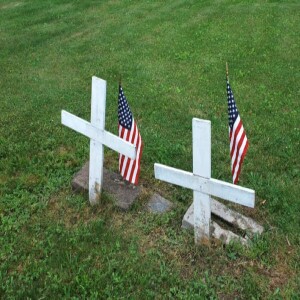
Journey Along the Underground Railroad: Virginia to Canada
World Footprints traces one of the most historic and courageous journeys in North America—the Underground Railroad route that carried enslaved people from bondage to freedom. This episode follows a trail that begins in Norfolk, Virginia and ends in Buxton, Ontario, with stops in Gettysburg, Pennsylvania and Lewiston, New York.
We explore the landscapes, landmarks, and legacies of those who resisted slavery and those who helped them. Along the way, we spotlight two unique destinations—Romania and the Falkland Islands—for listeners looking to connect travel with deeper stories of identity, struggle, and resilience.
Norfolk, Virginia: Last Southern Port on the Road to Freedom
Norfolk, Virginia, a 400-year-old port city and home to the world's largest naval base, played a crucial role in the Underground Railroad in Virginia. As one of the last southern port cities before freedom routes turned northward, Norfolk became a strategic departure point for enslaved African Americans seeking escape via maritime routes.
We speak with Dr. Cassandra Newby-Alexander, professor and historian at Norfolk State University, who helped develop the Waterways to Freedom Tour. This self-guided walking tour reveals the hidden history of Black resistance in Norfolk, showcasing sites where dockworkers and sailors smuggled fugitives aboard ships headed north.
Gettysburg, Pennsylvania: Where the Underground Railroad Ran Quietly
Gettysburg is often remembered for its Civil War battlefield, but it also played a vital role in the Underground Railroad network. Located in Adams County, a region with deep Quaker roots, Gettysburg became a key passage point for fugitive slaves escaping through Pennsylvania.
Debra Sandoe McCauslin, historian and author, guides us through her family’s legacy in the area. During a car ride through the region’s backroads, she introduces the people—both enslaved and free—who made this region a corridor of courage. She recounts stories of Quaker households that defied the Fugitive Slave Act to protect men, women, and children on the run.
Lewiston, New York: Final U.S. Stop at Freedom Crossing
Nestled on the banks of the Niagara River, Lewiston, New York was the final hurdle for many freedom seekers. From here, they crossed into Canada, risking their lives to make it across by boat or by foot—especially when the river froze over in winter.
We speak with Eva Nichlas and Tim Henderson from the Lewiston Council on the Arts, who help preserve the legacy of Freedom Crossing, where community members hid fugitives and helped them cross the border. But even in this northern border town, danger loomed. Slave catchers and bounty hunters stalked Lewiston, sometimes aided by federal law enforcement.
Buxton, Ontario: A Black Settlement and Safe Haven in Canada
Following the War of 1812, Canada’s stance against slavery turned it into a beacon for African Americans fleeing enslavement. One of the most notable communities founded by and for formerly enslaved people was Buxton, Ontario, also known historically as the Elgin Settlement.
Founded by Reverend William King, a white Presbyterian minister who fought racism among white settlers, Buxton became one of the most successful Black settlements in Canada. Today, it remains a living community where descendants of freedom seekers still reside.
We visit Bryan and Shannon Prince, farmers and historians who preserve the legacy of their ancestors through the Buxton National Historic Site and Museum. Their family’s story represents a powerful connection between past and present—land once granted to fugitives is still being tilled by their descendants.
P.S.
World Footprints Destination Spotlights: Romania & the Falkland Islands
In this episode, we also take a brief detour from North America to explore stories of cultural identity and history in two unexpected places: Romania and the Falkland Islands. These short spotlights offer context and inspiration for travelers interested in heritage tourism and deeper storytelling around the globe.
Feb 22, 2025
Feb 22, 2025
59 min
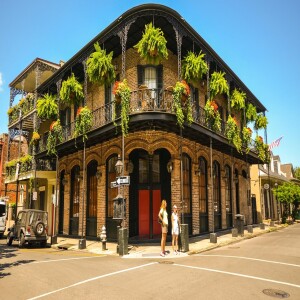
New Orleans has been the backdrop of many dark chapters in American history, but perhaps none so shocking as the slave rebellion of 1811. We will explore the history of America's largest slave revolt with author Daniel Rasmussen who organized his research in his book, American Uprising: The Untold Story About America's Largest Slave Revolt.The New Orleans African-American Museum of Art, Culture and History, located in Faubourg Treme, is helping to keep the stories of America's oldest and continuous black community alive. Established in 2000, former executive director John Hankins tells us that the Museum has held the mission "to preserve, interpret and promote" the African American cultural heritage of New Orleans, with a particular empasis on the Treme community.Le Musee de F.P.C. is a beautiful house museum that honors the legacy of New Orleans' Free People of Color. History will echo off the walls and along the wooden floor boards as we walk through this Greek Revival house in Upper Treme with Beverly McKinna. The Museum displays a hidden history of people whose stories have been complied in storage boxes and on cemetery headstones but their undeniable achievements serve to rewrite the conventional narrative of New Orleans' history.The rich and varied culture of New Orleans is seen in its food, music, traditions and architecture. History professor, Dr. Mary Mitchell, says that New Orleans has its own rhythm and energy that is influenced by Africans, Native Americans and European settlers and she gave us a taste of New Orleans as we soaked up the world flavors in the French Quarter.
Jan 8, 2025
Jan 8, 2025
30 min
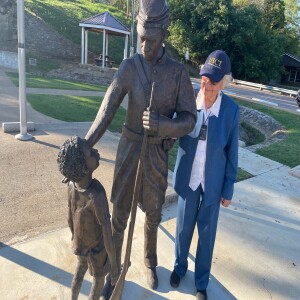
In this powerful episode of World Footprints, Tonya and Ian Fitzpatrick take listeners on a deeply personal and historic journey to Pulaski, Tennessee—a town known as the birthplace of the Ku Klux Klan but now undergoing a transformation. Their guest, Miss Vivian Leigh Battle Sims, an educator, artist, and community leader, has dedicated her life to uplifting the stories of marginalized voices, including the unsung Black Union soldiers who fought bravely during the Civil War.
At 87 years old, Miss Sims discovered the existence of the United States Colored Troops (USCT) while living in Pulaski. This revelation ignited a mission to honor their courage and sacrifice through a self-funded statue called Resurrection of Valor. Positioned as a beacon of hope and resilience, the statue challenges Pulaski's dark history and inspires future generations by showcasing the valor and strength of Black soldiers.
During this heartfelt conversation, Miss Sims shares her experiences as an educator, her struggles against systemic racism, and her innovative mentorship program for young Black men. These efforts profoundly impacted her community and improved academic outcomes for countless students. Tonya and Ian also reveal a surprising family connection to Miss Sims, adding an emotional depth to their dialogue about identity, legacy, and the transformative power of storytelling.
Through this episode, you'll discover how Miss Sims turned obstacles into opportunities, reshaped a town's narrative, and preserved the memory of heroes who were nearly erased from history. Resurrection of Valor is not just a monument but a symbol of pride, unity, and the enduring legacy of Black Americans who fought for freedom and justice.
Key Topics Covered:
The Story of Pulaski, Tennessee: From the birthplace of the KKK to a beacon of change.
Miss Sims' Journey of Discovery: Learning about Black Union soldiers at age 87.
Resurrection of Valor: The statue commemorating the bravery of Black soldiers in the Civil War.
Mentorship Programs: Miss Sims' impactful work with young Black men.
A Personal Connection: Discovering Miss Sims' family ties to Ian Fitzpatrick.
A Town's Transformation: Pulaski's efforts to reckon with its history and foster unity.
Production Note:This episode of the World Footprints podcast was recorded on location in Pulaski, Tennessee. Thank you to our guest, Miss Vivian Leigh Battle Sims, for sharing her story and her legacy.
Oct 8, 2024
Oct 8, 2024
11 min
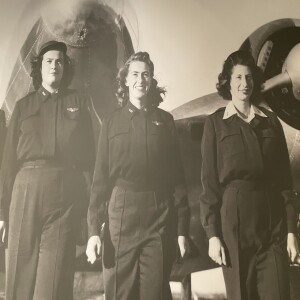
n this episode of World Footprints, hosts Tonya and Ian Fitzpatrick take you on an unforgettable journey through one of the most poignant chapters of history—the liberation at the end of World War II. Joined by special guest Michael Bell, Executive Director of the Institute for the Study of War and Democracy, the Fitzpatricks delve deep into the newly opened Liberation Pavilion at the National WWII Museum in New Orleans.
Michael Bell brings his wealth of knowledge and passion for history to guide listeners through the powerful and moving exhibits of the Liberation Pavilion. The episode uncovers the lesser-known stories of the final days of World War II, the liberation of Nazi concentration camps, and the profound human experiences that shaped the postwar world. Through personal accounts, historical artifacts, and emotionally charged narratives, listeners will gain new insights into the global impact of the war and its enduring legacy.
This episode isn't just about recounting events—it's about reflecting on the lessons of history. As the Liberation Pavilion takes visitors on an immersive journey through the aftermath of war, Tonya, Ian, and Michael discuss how these stories of resilience and freedom still resonate today. From interactive displays to firsthand testimonies, the episode brings the museum's exhibits to life, offering a vivid look at the past and the ongoing fight for human rights and justice.
Whether you’re a history buff or simply seeking inspiration from real-life stories of courage, this episode provides an in-depth exploration of one of World War II’s most significant moments. Join us as we honor the sacrifices made and consider the powerful lessons history has to offer for our future.
Subscribe to World Footprints and share this episode to help spread the stories of liberation and hope.
Mar 19, 2023
Mar 19, 2023
25 min
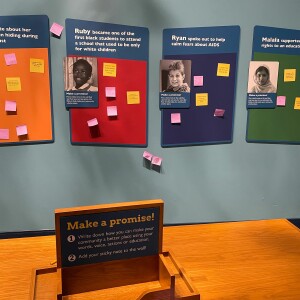
In this episode of World Footprints, hosts Tonya and Ian Fitzpatrick share the Power of Children exhibit at the Children’s Museum of Indianapolis. They speak to Monica Ramsey, Director of exhibits and interactive media, as she guides them through the Power of Children: Making a Different exhibit and shares the stories of four extraordinary children who have significantly impacted the world - Ruby Bridges, Ryan White, Malala Yousafzai, and Anne Frank.
Mar 1, 2023
Mar 1, 2023
39 min
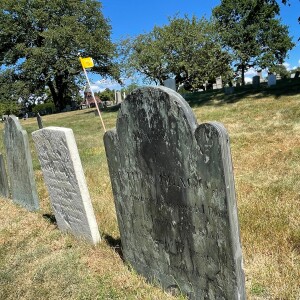
In this second episode of our interview with Keith Stokes, advisor to the Rhode Island Black Heritage Society, we continue learning about Newport's underrepresented history during our walk through God’s Little Acre.
In Episode One, Keith introduced us to prominent Africans like Pompey Brenton who lay buried in God’s Little Acre. In this second episode, Keith sheds light on the significance of this burial site and the stories of the people who were laid to rest there, providing a deeper understanding of the African presence in Newport's history.
Feb 24, 2023
Feb 24, 2023
28 min
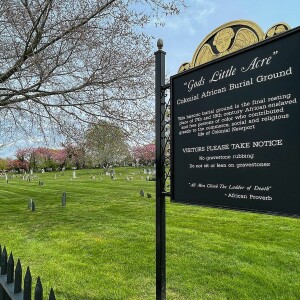
In this episode of the World Footprint podcast, we have the privilege of interviewing Keith Stokes, advisor to the Rhode Island Black Heritage Society. Keith walks with us through the colonial African burying ground of God's Little Acre in Newport, Rhode Island and he shares many of the unrepresented stories that are etched in the grave markers.